
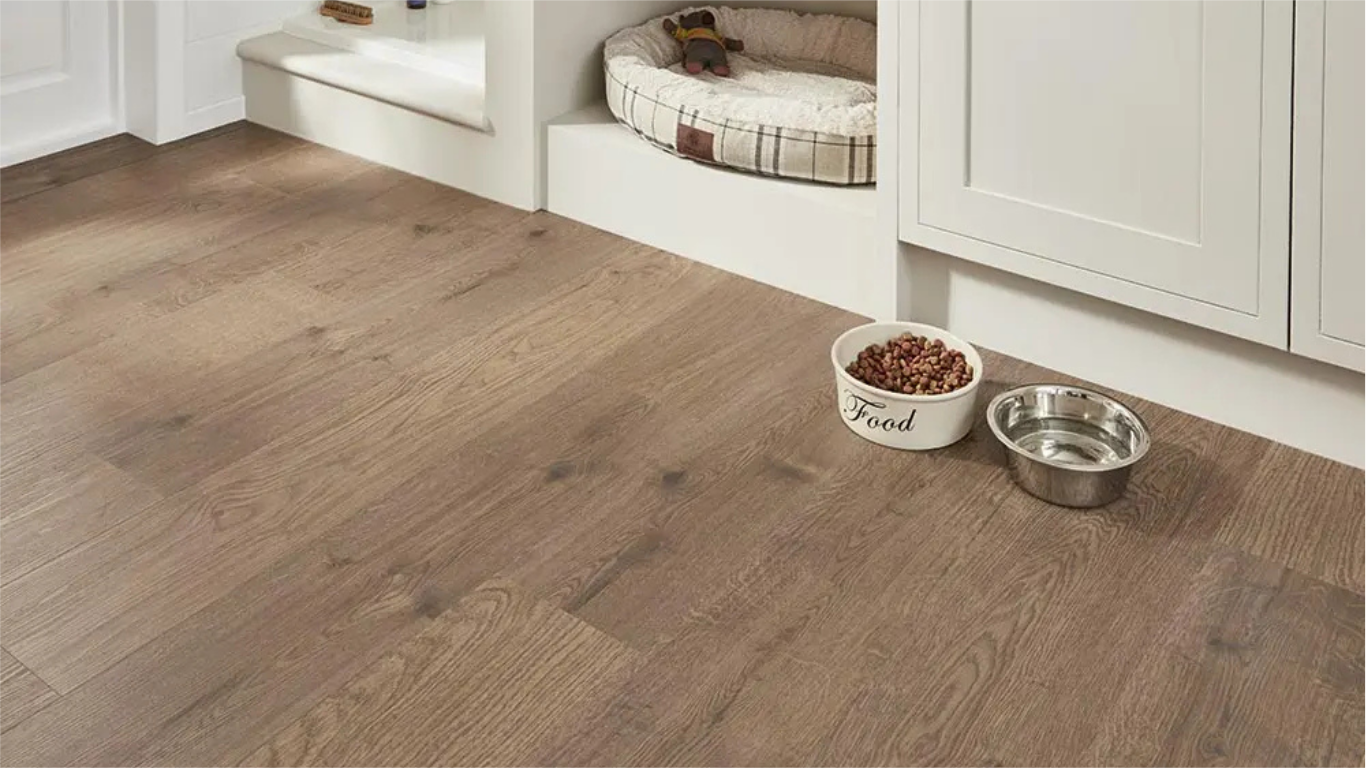
If you’re shopping for new flooring, you’ve probably landed on the same three options everyone does: luxury vinyl plank, engineered hardwood, and solid hardwood. They can look surprisingly similar in a photo. They are not the same floor.
The right choice depends on where it’s going, who’s walking on it, and how long you plan to stay in the house. Here’s a straightforward breakdown of each one, so you can walk into our showroom knowing what to ask.
Luxury Vinyl Plank (LVP): Built for Real Life
LVP is our most popular floor at Bryan Companies, and it’s easy to see why. It’s a synthetic floor with a printed design layer that mimics wood, topped with a protective wear layer. Many products today use a rigid core that makes them very stable and feel more solid underfoot.
Why people love it: It handles moisture far better than wood, and many LVP products are rated waterproof. It holds up to kids, pets, muddy boots, and spilled drinks. The visuals have come a long way, and good LVP can be hard to tell from wood at a glance. It’s also typically easier on the budget.
What to watch for: It can’t be sanded or refinished. If a plank gets damaged, it gets replaced. It doesn’t carry the same resale appeal as real hardwood, and lower-end products can look flat or feel hollow. Wear layer thickness makes a big difference in how long it lasts.
Best for: Kitchens, bathrooms, mudrooms, basements, rentals, and any home with pets or young kids.
Engineered Hardwood: Real Wood, Built for Stability
Engineered hardwood has a top layer of real hardwood bonded to a core built from layers of plywood or high-density fiberboard. From the top, it’s real wood. Underneath, it’s built to resist movement.
Why people love it: You get the genuine look and feel of hardwood with better stability when humidity swings. That layered construction makes it a stronger fit for spots where solid hardwood struggles, including many basements and installs over concrete. Depending on how thick the top wear layer is, it can often be refinished once or more.
What to watch for: It’s still wood on top, so it’s not waterproof and it will scratch. Refinishing is limited by that wear layer, so a thin veneer won’t give you the same lifespan as solid hardwood. Quality varies a lot between products, which is why seeing samples in person matters.
Best for: Homeowners who want real wood in more parts of the house, including lower levels and open floor plans.
Solid Hardwood: The Classic
Solid hardwood is exactly what it sounds like. Each plank is one piece of real wood, top to bottom.
Why people love it: Nothing else feels quite like it underfoot. It has natural grain, warmth, and depth that ages with the home. And because the whole plank is wood, it can be sanded and refinished many times over its life. A well-cared-for hardwood floor can last for generations, and buyers notice it when you sell.
What to watch for: Wood moves with humidity. In Iowa, that means it expands in humid summers and shrinks in dry winters, which can lead to gaps or cupping if moisture isn’t managed. Solid hardwood generally isn’t recommended for basements, full bathrooms, or anywhere water is a regular visitor. It also scratches and dents, especially with big dogs.
Best for: Living rooms, dining rooms, bedrooms, and main-level spaces where you want a long-term investment.
Material Comparison
| Material | Synthetic with printed wood look |
| Moisture resistance | High (many are waterproof) |
| Basement friendly | Yes |
| Scratch resistance | High |
| Can be refinished | No |
| Resale appeal | Moderate |
| Typical cost | Lowest to mid |
| Material | Real wood top, layered core |
| Moisture resistance | Moderate |
| Basement friendly | Often yes |
| Scratch resistance | Low to Moderate |
| Can be refinished | Limited, depends on wear layer |
| Resale appeal | High |
| Typical cost | Mid to high |
| Material | Solid real wood |
| Moisture resistance | Low |
| Basement friendly | Generally no |
| Scratch resistance | Low to moderate |
| Can be refinished | Many times |
| Resale appeal | Highest |
| Typical cost | Highest |
So Which One Is Right for You?
There’s no single winner. It comes down to a few honest questions:
- Where is it going? Water-prone rooms point toward LVP. Main living areas open up all three.
- Who lives there? Pets and kids are tough on wood. LVP forgives a lot.
- How long are you staying? If this is your long-term home, real wood can pay off over decades.
- What do you want it to feel like? Some people simply want real wood, and that matters too.
Plenty of homes end up using more than one. LVP in the kitchen, baths, and basement with hardwood in the living spaces is a common and smart combination.
Hear the Full Conversation on Hammered with Bryan
This question is the topic of a segment in Episode 1 of Hammered with Bryan, the home improvement podcast from Bryan Companies. Host Jackie Schmillen sits down with co-owner Troy Bryan to talk through LVP and engineered hardwood side by side, including the trade-offs homeowners don’t always think about until after the floor is down.
They don’t hand you one answer. They give you the right questions to ask for your home. Listen on Spotify, Apple Podcasts, or YouTube.
See It in Person
Flooring is hard to choose from a screen. Stop by the Bryan Companies showroom in Urbandale to see and feel LVP, engineered hardwood, and solid hardwood side by side, and talk with a team that installs all three across the Des Moines area.
Frequently Asked Questions
Is LVP better than engineered hardwood?
Neither is better across the board. LVP wins on water resistance and durability. Engineered hardwood wins on authenticity and resale appeal.
Can engineered hardwood go in a basement?
Often, yes. Its layered core handles humidity better than solid hardwood. Always check the manufacturer’s guidelines for below-grade installs.
Does LVP increase home value?
Quality LVP can make a home more appealing, but real hardwood typically carries more weight with buyers.
How long does each type last?
Solid hardwood can last generations with refinishing. Engineered hardwood and LVP lifespans depend heavily on wear layer thickness and how the floor is used.